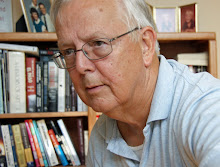
Today I'd like you to meet Peter Bernhardt, who is one of the better Indie authors I've come across.
 |
| Peter Bernhardt |
Q. The Stasi File
and Kiss of the Shaman’s Daughter both feature Rolf Keller and his
friend Sylvia Mazzoni. Tell us about the genesis of your series.
A. When my wife and I
moved to Sedona in retirement I was casting about for plot ideas for a novel I
had been dreaming about writing during my later years of practicing law. While
I had done lots of writing, essays and short stories in school in Germany, law
journal articles and legal briefs, I knew nothing of how to go about writing a
novel. I devoured every how-to-book I could get my hands on and attended a
local writers’ workshop. One of the mantras bandied about is to write about
what you know. As a newbie, I took that advice to heart.
What did I know
about? Growing up in West Germany, coming to the United States in my early
twenties, and practicing law in this country. I had also developed a passion
for opera when a seed, planted during my school years (when I would rather have
listened to Elvis Presley and the Beatles), sprouted in my thirties. Thinking
that writing a spy thriller might be easier than other genres—little did I
know—I wanted to find a plot that would incorporate my experiences as well as
my passion.
After many weeks of
cogitating—mostly during my morning runs through Sedona’s red rock country—I
finally settled on a story that would include three of the most remarkable
events in post-World War II Germany: unification, which most Germans thought
would not happen during their lifetime, the terrorization of West German
society by the Red Army Faction, and the East German secret police, the most
feared institution in that communist state.
Q. You and your
character Rolf came from Germany to the southwest United States. I understand
you grew up in Stuttgart, in West Germany. What drew you to the Southwestern U.S.?
Same question for Rolf.

 A. While I’m in many
ways an atypical German—which is probably why I emigrated to the U.S.—I share
the fascination most Germans have with the American West. One of the most
popular series of novels in Germany are the Westerns by Karl May who penned
these wonderful tales of the Wild West with Old Shatterhand and Apache Chief,
Winnetou, without ever having set foot in the U.S. So much for writing about
what you know. I’m not sure I can put into words (not good for an author) the
allure the Southwest holds for me. I could cite the open spaces, the huge sky,
the red cliffs, the Native American culture, but if I had to pick one thing it
would be that the landscape is totally different from Germany. It seemed only
natural to instill my protagonist, Rolf Keller, with the same kind of
enthusiasm, not to mention to give him the opportunity to reunite with Sylvia
as further incentive.
A. While I’m in many
ways an atypical German—which is probably why I emigrated to the U.S.—I share
the fascination most Germans have with the American West. One of the most
popular series of novels in Germany are the Westerns by Karl May who penned
these wonderful tales of the Wild West with Old Shatterhand and Apache Chief,
Winnetou, without ever having set foot in the U.S. So much for writing about
what you know. I’m not sure I can put into words (not good for an author) the
allure the Southwest holds for me. I could cite the open spaces, the huge sky,
the red cliffs, the Native American culture, but if I had to pick one thing it
would be that the landscape is totally different from Germany. It seemed only
natural to instill my protagonist, Rolf Keller, with the same kind of
enthusiasm, not to mention to give him the opportunity to reunite with Sylvia
as further incentive.
Q. Talk a bit about
your character development. How much of yourself did you put into Rolf and
Sylvia?
A. There are obvious
parallels between Rolf and myself. We both emigrated from Germany to the U.S.
We both became lawyers. We both are passionate about opera. That’s where the
similarities end. While I grew up with the beer and wine drinking culture of
Germany and in my younger years imbibed extensively on occasion, I never lost
control (another German trait I share) and never suffered from the addiction of
alcoholism that afflicts Rolf. However, I’ve had friends who were alcoholics
and got sober through Alcoholics Anonymous. I learned a lot from them about
this twelve-step program, so it seemed natural to give Rolf this disease and
thereby follow the advice of many a writing coach that to humanize your
protagonist you must give him a flaw or two.
As for Sylvia, what
caused me to draw her character is my intense admiration of opera singers, her
determination to overcome a youthful mistake of a romance with a terrorist, to
lift herself from an upbringing by a single mother, an Italian guest worker in
post-war Germany. In short, a strong female character who has my utmost
admiration. If there is such a thing as reincarnation, and if I get to choose,
I’ll return as a soprano gracing the stages of the world’s great opera houses.
Of course, by then opera may be extinct.
Q. What inspired you
to write about a rebellion that took place four centuries ago? How did you go
about researching that part of the novel?
A. When I finished The Stasi File, I had a deep sense of
loss. Sylvia and Rolf had been with me for several years and there was hardly a
morning when I didn’t think about them during my jog through Sedona. I had
already planned to write another spy novel involving the Stasi Romeos—the novel
I am currently working on—but several readers encouraged me to write a sequel.
What better place to send Sylvia to perform than at the Santa Fe Opera, which
is where we attend performances every summer? A magical setting, which I hope I
managed to convey in Kiss of the Shaman’s
Daughter.
Once I settled on
Santa Fe, I let my imagination go to work, considering several scenarios that
would create danger for Rolf and Sylvia. The news accounts of traffickers in
Native American artifacts in Utah gave me the idea of including archaeology and
the illicit trade in the plot. Not knowing anything about the subject, I did a
lot of research on the Internet and read numerous books. I had never heard of
the Pueblo Indian Revolt of 1680 and most readers I have asked haven’t either.
The subject fascinated me and somehow this German without one drop of Indian
blood came up with the idea of creating a young daughter of a Pueblo shaman and
giving her a crucial role in the revolt. Add to that a news account in an
Albuquerque paper of the lore of lost treasure of Indian artifacts and Spanish
gold, and voilà.
But how do you
combine two story lines over three hundred years apart? I wanted to experiment
with a novel approach that might stretch some readers’ imagination. I chewed on
that for a long time until I came up with a technique I was happy with. So I
wrote the contemporary chapters in past tense and the Pueblo Revolt chapters in
present tense.
Q. What’s next for
Rolf and Sylvia? Can we expect any more run-ins with the Stasi?
A. The third novel I
am writing now involves a strong female protagonist who tracks down a Stasi spy
in the West. Sylvia and Rolf may well return after that, but whether they will
battle the Stasi or other bad guys is undecided. With Sylvia performing on
opera stages the world over, there will undoubtedly exist many opportunities
for her and Rolf to get into all kinds of trouble.
Q. You’re a lawyer
with an obvious love of opera and the Southwest, and your novels look like
clear examples of writing what you know. How much research do you need to do?
A. Prior to outlining
a plot and penning the first chapter, I spend weeks and months on research.
Then while I write the novel and update my outline, I keep researching because
numerous details I hadn’t considered inevitably will need to be addressed. As a
reader I am always disappointed when a novel contains something that couldn’t
possibly have occurred in the way the author wrote it. I do not want to write
anything that isn’t at least plausible for the time period and the location of
my plot. For instance, after thoroughly researching the Stasi, I settled on
numerous military titles for the various characters. Only after additional
research did I discover that I had assigned one of the Stasi generals a rank
that existed in West Germany but not in East Germany. I was glad to have caught
that so I could make the change.
While I’m a
passionate opera lover, I am not a musician; I never learned to read music. So
when I visited my mother in Stuttgart, I contacted the Stuttgart Opera and
requested a tour as well as access to a professional who could answer the many
questions I had. They put me in touch with a former professor at the opera
school who at that time was a role coach at the opera. He not only answered all
my questions, but arranged for me to sit in during a rehearsal of students at
the opera school and an interview with a soprano who was about to graduate. The
retired professor has since reviewed all the opera parts in my novels for
accuracy and plausibility and I have listed him in the acknowledgment section
of my novels. He happens to be from Colorado and he put me in touch with a
friend who is an archaeologist who in turn checked over the archaeological
parts of Kiss of the Shaman’s Daughter.
A long answer to your
question how much research I need to do. I do a ton of research. The trick is
to do exhaustive research and then use only so much as will enable your
characters to appear genuine in a plot that moves in a way that seems
inevitable.
Q. What (or who) are
the major influences on your writing?
A. There are several
authors whose novels I admire. From the classics like The Great Gatsby, For Whom
the Bell Tolls, and Animal Farm to the authors who wrote in the spy novel
genre. The ones who influenced me the most are John LeCarré (The Spy Who Came in From the Cold), Ken
Follet (The Eye of the Needle),
Charles McCarry (The Tears of Autumn),
and Gerald Seymour (Traitor’s Kiss).
Those four spy novels are the best I have ever read.
But as great as those
novels are, I must say that what influences me the most is my imagination. Even
during my legal career, I tried to write creatively. When I decided to give
fiction writing a try, I didn’t know what to expect. To my surprise and delight
I found that I have a muse that feeds me ideas and gives me inspiration.
A.
After attending a few local writers’ groups, I joined the Sedona Writers’ Group
at the time I began to write The Stasi
File. A few years ago the facilitator resigned and asked me to take over
the group. Our membership fluctuates from a low of six to a high of twelve.
Unlike many groups where members read from a chapter or short story and others
comment, we submit chapters or stories in a format that would be acceptable to
an agent or publisher. We take the submissions home, mark them up in red, and
then critique the major points at the next meeting. We find this approach
superior to on-the-spot critiques.
In
addition, I suggest certain writing topics for discussion. For example, I put
on the next meeting’s agenda a discussion regarding an assertion in one of the
articles I read on the Internet Writing Workshop: using coincidence to get your
protagonist into trouble is wonderful, but using it to get it him out of
trouble is cheating. We had an animated email discussion among our group
already with some of us (including me) agreeing and others disagreeing with
that statement.



 Posts
Posts