Tuesday, October 27, 2015

Meet the author of The Sword & Scabbard

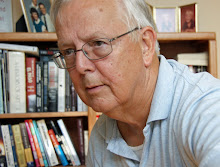
Today I am happy to host Allen Woods, a writer and historian who has written the novel The Sword & Scabbard: Thieves and Thugs and the Bloody Massacre in Boston. Apparently, many colonists were not as well behaved as our Founding Fathers! Please feel free to ask him questions and comments.

Crude vengeance, angry mobs

Author Allen Woods
One of the reasons I find history so fascinating is that there is so much to learn compared to what many of us learned in school. As George Orwell pointed out in 1944, history is written by the winners. In general, the winners have a narrative they’d like to convey whether it strictly matches the facts or not.

Most of us have ingested a view of Revolutionary times that involves noble speeches and actions, and a unified pursuit of democratic ideals (this is true of most other periods of American history as well). There were certainly instances of noble thoughts and deeds during the period, but there was a lot more going on as well. My research brought to mind the modern cliché about politics and making sausage: you might like the product, but the process is rather unsavory.

In doing research for some American history textbooks, I began to think about some of the realities that were suggested but not emphasized, such as the practice of tarring and feathering British officials or their supporters. It all sounds rather jolly until you imagine a man stripped of his clothes, cowering before an angry mob, painted with boiling tar from the docks, covered in foul poultry feathers and dragged about town to the delight of jeering crowds. According to one historical account, removing the tar took off layers of skin as thick as steaks. Suddenly, Revolutionary ideals seem a long way off.

The same was true of the protests against the Stamp Act in Boston. Anyone willing to sell the tax stamps or support those who did risked the crude vengeance of a rough and angry mob directed by leaders who stayed in the background and often hypocritically deplored the violence in public. It was common for a British Customs family to have their house surrounded and windows broken out as a mob howled threats, for businesses to have their doors painted with urine and feces during the night, for officials to be accosted in the street, knocked down and dragged through gutters filled with sewage.

An early depiction of the Boston Massacre
Of course, the British soldiers responded in kind once they were ordered to occupy Boston to maintain order in 1768. There were constant scuffles and brawls in the streets between angry British soldiers who were paid a pittance and forced to live in harsh conditions and dockworkers and sailors out of work because of the British occupation. It was this physical violence, especially the threats to the British upper class and their property, that propelled England and America down the path toward a formal war more than any of the speeches or writings by American leaders.

Another issue suggested by my research and that inspired my book was the intersection between politics and crime. Smuggling was common in American ports before the war and was the foundation of John Hancock’s fortune and that of some other large merchants. At some point, it dawned on me that when John Hancock’s ships filled with taxable wine were unloaded beneath the noses of British Customs officials, it wasn’t Hancock unloading the hundred-gallon barrels in the middle of the night and transporting them to be hidden nearby. He, or those working with him, needed a connection with people willing to work in the night and able to evade capture by heavy-handed officials. Later, when a rival British newspaper had its office wrecked and equipment vandalized, American leaders needed people skilled in criminal activities to do the deeds.

I used factual accounts of many criminal incidents and political actions in my book to illuminate the times from the ‘street level’ rather than present the flowery writings and speeches that dominate much of the common historical narrative. My intent in this book, and those will follow, is not to tear down the heroes of the time, but simply to provide a more accurate picture. Just as the mythology surrounding the personal life of Franklin Roosevelt, John Kennedy and Richard Nixon have been fleshed out with more realistic and unflattering detail, careful attention will allow us to understand the Revolutionary period better as well. From my point of view, an honest portrayal of a fallible hero is better than any mythical, sanitized one.

~~~

Allen Woods has been a full-time freelance writer and editor for almost 30 years, recently specializing in social studies and reading textbooks for all ages. The inspiration for The Sword & Scabbard came while doing research for an American history text. He resides in Massachusetts and has been married to his wife, Irene, for over 30 years.

His blog is at www.theswordandscabbard.com. The paperback and Kindle version are available at this link.


Sunday, October 25, 2015

Read ’em and weep

This is the result of an exercise that required using no modifiers. You cant blame the Internet Writing Workshop for inciting this nonsense, though it is for one of their practice exercises.

READ EM AND WEEP


Jack Jackson wiped foam from his mustache, and he smiled the smile of a winner. Or a cheat. “Read em and weep, ladies,” he said as he slapped his cards one by one on the table, which shook with laughter that bounced off his gut. “Jack, Jack, Jack, and Jack. Don't I just love that name? Oh, and a deuce of no use.” Jack reached and scooped the scattering of twenties and fifties, the hopes and prayers and cash for groceries and rent and uniforms for football for the boys and shoes for Sally all disappearing in a miasma of smoke from the Cohibas Jack had smuggled out of Havana. Wives were going to have husbands sleeping on the couches, and apologies wouldn’t suffice worth the kettle of beans my girlfriend burned on the stove a month ago when she stubbed her toe and I had to drive her to the doctor. No babies were about to begin their journey into the world that night, not from us losers.

I couldn’t bear the agony. What would I tell the Missus? She’d weep, then scream words she saved up just for times like this, then ricochet a skillet off my cranium as her eyes glowed like rubies heated in the depths of Hades. No adjectives or adverbs could save me, and by midnight I’d lie in a pool of blood on the linoleum on the floor of the kitchen. Then I expect she'd wipe her prints off the weapon, call 911, and blame it on an intruder.

Fearing such an outcome, I drew my .44 and put a slug in Jack. I guess it got him in the heart, because his shirt blossomed there like a rosebud in June. His mouth gaped like one of them flytraps from Venus, but he was through gloating like he'd won the lottery or laid my wife. The rest of us split the pot and went home.

I am at the gallows where I will hang for the murder of Jack Jackson, but I don’t mind. It was either this or the skillet.

Monday, October 12, 2015

Upcoming book events

We've had an avalanche of self-published and independent books in the last few years, and many of them -- most of them -- are far from being ready for the world to see. They are often poorly edited and come across as amateurish. That's too bad, because they obscure some quality works worthy of public attention. In the coming weeks I'll be posting about at least three of these, with stories that couldn't be more different from each other.

Bun Yom is a survivor of the Khmer Rouge genocide of the late 1970s and the author of Tomorrow I'm Dead. I've read many accounts of that horror, such as The Killing Fields, the story of the late Haing Ngor that was later made into an Academy Award-winning movie. And there is To Destroy You Is No Loss: The Odyssey of a Cambodian Family by JoAn D. Criddle. But his book is in his own heartfelt words.

Guilie Castillo Oriard has just published The Miracle of Small Things, an engaging novella set in her adopted Curaçao. She's a Mexican native who writes beautiful English. I understand she has an e-version of her book coming out soon, and it deserves to be on a lot of Kindles and iPads. Soon we'll have much more about Guilie and her book.
Allen Woods has written The Sword and Scabbard, a historical novel set in colonial Boston, and it's about events leading up to the Boston Massacre. He's going to be my guest on October 27, and I expect we'll hear a lot about rowdies and Redcoats.


Saturday, August 29, 2015

Oh God, why me?

A writing exercise on the theme Oh God, why me?

The Usual

First, Phil fell out of bed, the impact awakening him from a tumultuous nightmare involving sex and chainsaws. He lay on the floor like the woman on TV who has fallen and can’t get up, except that he had no button to push to call for help. The night before, his girlfriend Gail had boarded a flight to Tokyo to play house with a Sumo wrestler. So Phil remained prone and alone, with an egg growing just above his right temple. In pain, he could think of only three words: Ty-Le-Nol.

Eventually he got to his feet, performed his usual ablutions, ate his usual bowl of Froot Loops, donned his usual clothes, and headed as usual to his proofreading job. Unusually, a pizza delivery car raced down the street, splashing mud on him “from head to toe,” as he observed, though he disliked the cliché. There was no time to turn back and change, so he boarded his usual trolley and found the last empty seat.

At the next stop, a sixty-something lady got on. A gentleman as usual, Phil offered her his seat. “No thank you,” she said. “You look like you need it.”

The trolley wobbled along, and Phil observed a young man speak to her. While she was distracted, another young man reached into her purse and lifted her billfold.

“Hey, you!” Phil said. “Ma’am, the guy stole your wallet!” He looked around to other riders, but as usual, no one wanted to get involved. Then the thief brandished a switchblade, so Phil said no more. He left the trolley before his usual stop, then reached for his cell phone to call 911, but it was gone. He checked for his wallet: it was gone as well. He’d have no cash for lunch, never mind trolley fare home.

For three long blocks, a bitter wind stung his face; he was ill-prepared for the weather, as his usual stop dropped him off in front of work. Passers-by ignored him.

Finally, he arrived to find all of his co-workers standing on the sidewalk. “What’s going on?” he asked the receptionist.

“Fire drill. God, what happened to you?”

Grateful for sympathy, he began his tale of woe. A minute into his story, she said “Whatever,” and turned away.

A half hour later, his boss called Phil into her office. “I’m sorry,” she said, “but we’re letting you go.”


Saturday, August 22, 2015

Ultimatum

A short writing exercise on the theme "Ultimatum"

Which one do you love more?

“You have thirty seconds to decide,” says the man behind me. “Which one do you love more?” In front of us sit my parents, strapped into chairs behind a plexiglas window. His tongue brushes my earlobe.

“Please don’t do this,” I beg.

“It’s up to you, Maria. Which one lives, which one dies? Pick one, or else they both die.”

Within my reach are two buttons. The left button kills Mother, and the right one kills Father. Taking no action kills them both. A timer counts down with large red digits. My head swims, and I am short of breath. This is punishment for my part in the insurrection. My parents despise the regime as much as I do, but they have warned me that resistance is too dangerous.

Father’s lips move. “Me,” he seems to say.

Mother’s lips move. “Me,” she seems to say.

“Fifteen seconds,” the man says.

“Let them go,” I say. “Take me instead.” He ignores my plea.

My parents have done their imperfect best in my seventeen years. Father could be harsh with the palm of his hand; Mother with the lash of her tongue. But they love me, and I them. And we loved my elder brother, whom we watched hang this morning.

“Decisions, decisions.” His hot breath is on my ear. Ten seconds left on the timer. Nine. Eight. Seven. “God hates you, and so do I.”

Six. Five. Four. There is nothing more for me to say. My hands shake, palms sweat. Father and Mother close their eyes.

~~ Idea borrowed from William Styron's Sophie's Choice~~

Saturday, August 15, 2015

Message in a Bottle

A short writing exercise on the theme of "message in a bottle," specifically communicating with your younger self

DAVEY DOES DARLENE

Davey and Darlene were making out in the back seat of his Dad’s Henry J, sucking each other’s tonsils at the drive-in. She was easy about everything from the waist up, but getting in her knickers was a no-no. “Oh baby,” he whispered in her ear, along with other romantic shit his big brother Mel told him made the girls go limp. What was about to happen was he was going to go limp, which was not the idea at all.

“You’re just like all the boys,” she said.

All the boys, yeah. Half the guys in high school had done Darlene at least once; he had his best pal Mikey’s word on that. So what was the matter with him? Finally, she pushed him away, sweetly but firmly. “Let’s watch the movie.”

Which she did, as he reached for his bottle of Narragansett and swigged the forbidden brew. Jesus,
Mary, and Joseph, why did they have to sit through Peter Pan before Stalag 17 came on? Some fairy twinkle-toed across the big screen as the moon rose behind it.

Davey stepped out of the car. He drained the last dewy drop and held the amber bottle up to the moonlight. He saw handwriting through the glass bottom. It said, “You’re screwed.”

“Huh?” he muttered.

“You know what I said. You’re screwed six ways from Sunday.”

Davey looked around and saw an apparition, a man who looked like he’d lost a few bar fights. “I had to show up in spirit,” the man said, “because I couldn’t fit the whole message in the bottle.”

“What do you want?” Davey said.

“I’m your older self, here to say enjoy life while you can, since it’s going to turn into one unholy mess. First, don’t worry about getting laid. She’ll do it with you during the second feature, and you’ll knock her up.”

“But I’ll wear a—”

“You forgot them. Your unwanted son will spend most of his short life in juvie, by the way. From tonight on, your life is one long string of mistakes.”

“But tell me what they are so I won’t make them!”

“That’s not how it works, kid.  The future’s already happened, and no one can change it.”

The apparition disappeared. Was Davey going nuts? What was in that beer, anyway? Then he promptly forgot the meeting.

Back in the car, he reached for Darlene.


Sunday, August 02, 2015

Money is the motive

A short writing exercise on the theme of money as the motive

Slick Willie

Let me tell you I got this friend Willie, he was in for a thirty-year stretch but just got self-paroled. See, he puts this ladder up against the prison wall and whaddya know, the spotlight catches him. So he looks right up at the tower and waves, yelling “It’s okay!” and the dumb butts let him escape.

Long as I’ve known him, he’s robbed banks. “That’s where the money is,” that’s how a newspaper quoted him. Me, I mostly rob the five-and-dimes like Woolworth’s, and right now I’m doing a nickel for it upstate. But Willie puts on a disguise, walks into a bank waving a Tommy gun, and just like Bob’s your uncle he walks out with loot. The gun’s always unloaded, he says, because a loaded gun might hurt somebody. The bank tellers never know that, though.

So why does he do it? Money’s the motive, sure, but I think there’s something else. There’s a pure joy in the act of it, like the robbery itself is a work of art. It’s like the way Joe Dimaggio smacks a double, the way Enrico Caruso hits high C, the way Pablo Picasso paints whatever the fuck he paints. It’s like getting up and going to work at a job you love.


Not everyone appreciates Willie’s dedication to his art, of course, like cops and judges. He’s spent as much of his life in the can as out of it, and dollars’ll get you donuts he hasn’t seen the inside of a prison cell for the last time. But if he does come back inside, he has a lot of friends to look out for him. He’s never been known to hurt a soul, and he loves to teach his craft.